Our Pedagogy
Play. Discover.
Become.
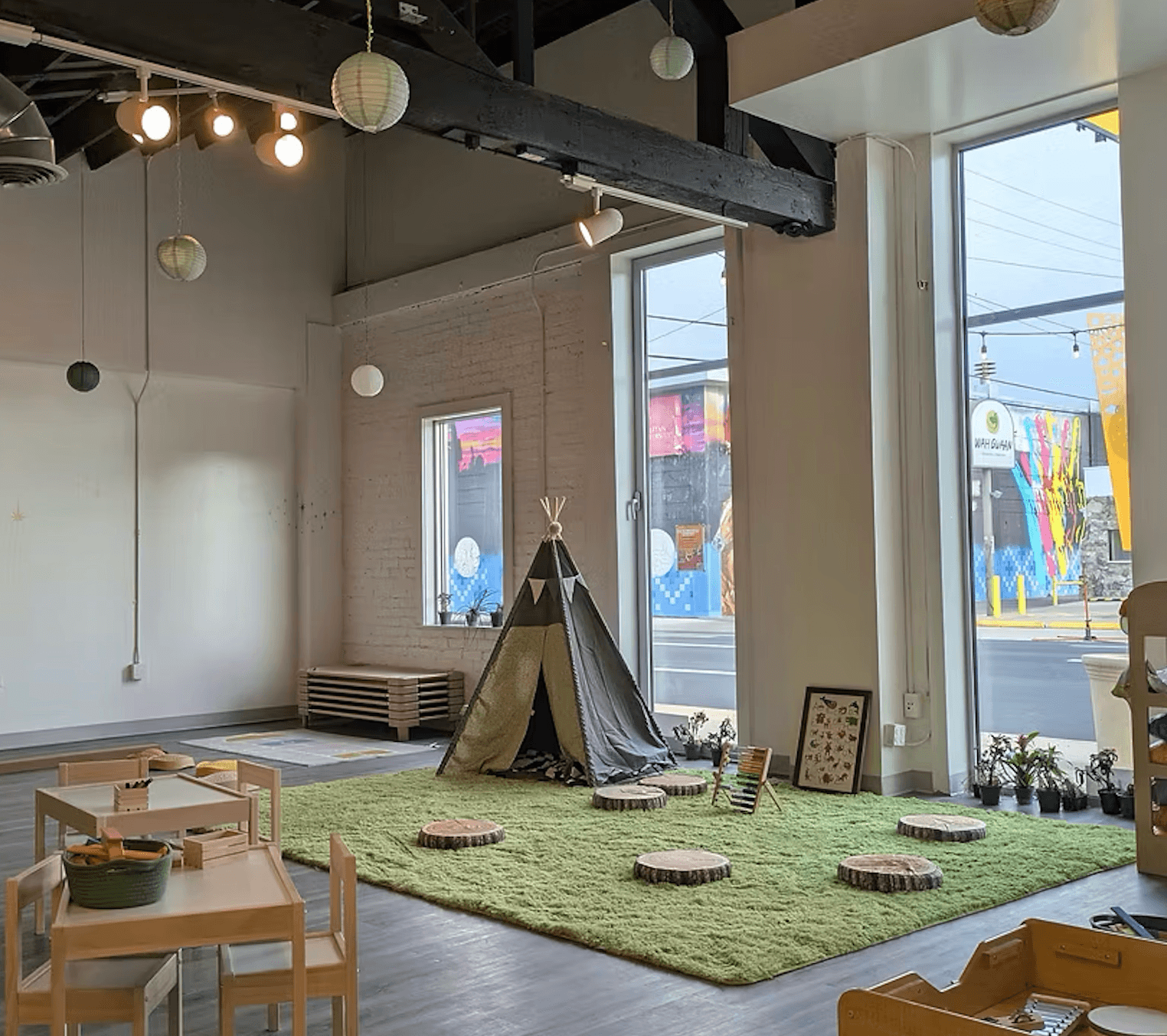
A joyful childhood lays the foundation for a love of learning. We give children time to play, caring relationships to rely on, and thoughtful support as they explore, make friends, and discover what they can do.
Our teaching is grounded in Finland’s National Core Curriculum for Early Childhood Education and Care (2022), brought to life in a French-immersion classroom.
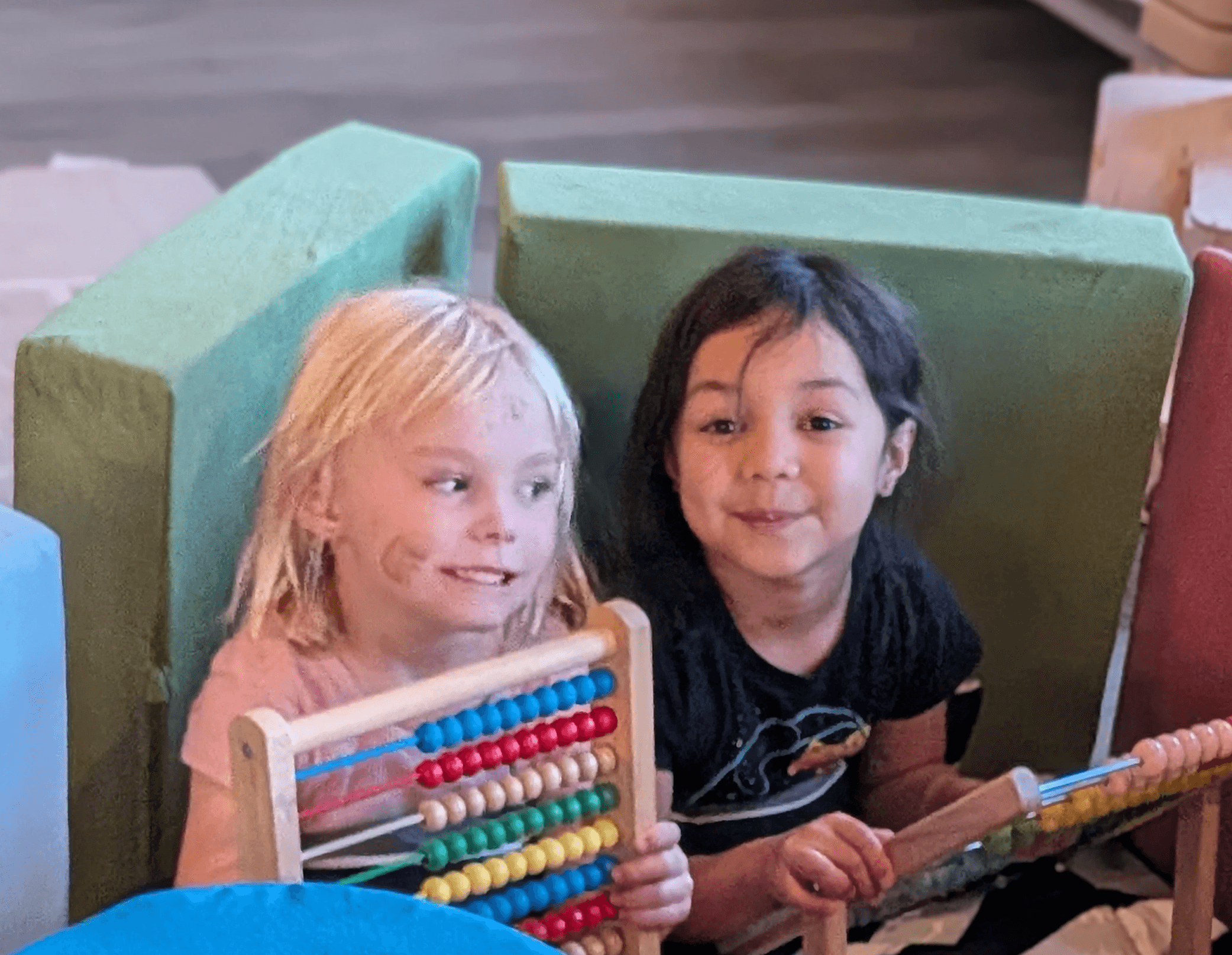
Small moments. Meaningful discoveries.

Finnish foundations. Thoughtful teaching.
In Finnish early education, care, learning, and well-being belong together. Play matters, children’s ideas are heard, and teachers shape experiences around each child’s strengths and interests. At Petit Loup, that means purposeful teaching within a warm, joyful day—and a close partnership with you.
Play that builds strong foundations
A block tower, a pretend café, or an invented story gives children meaningful reasons to talk, count, plan, and solve problems together. Teachers notice what captures their interest, join as thoughtful play partners, and offer questions or materials that help ideas grow. We also protect time for child-led free play, with room to imagine, choose, and follow a new possibility.
Research insight: A review found guided play supported selected early math skills and switching between tasks, with benefits varying across outcomes.
Feeling safe, seen & understood
Your child deserves a place where they feel known and welcome. Through warm relationships and predictable routines, we help children name feelings, ask for help, and work through disagreements with care. A teacher might sit beside a frustrated child, help them find words, and support a fresh start with a friend. These everyday moments make emotional learning part of belonging.
Research insight: A review of structured preschool social-emotional learning programs found improvements in social skills, emotional understanding, and self-regulation.
Curiosity, with your child at the center
A fascination with insects, a favorite story, or a question about shadows can become the beginning of a shared investigation. Teachers observe, listen, and document what children are discovering, then introduce materials and questions that offer a meaningful next challenge. We build on each child’s strengths, make room for their ideas, and celebrate their own progress as their interests grow.
Finnish foundation: Children’s strengths and interests guide planning; observation and pedagogical documentation help teachers adapt their support.
Proud “I can!” moments
Choosing materials, putting on a coat, or helping set the table gives children a real part in their day. Teachers offer patient encouragement and just enough help, so children can practice, try again, and feel the satisfaction of doing more for themselves. Along the way, we support taking turns, staying with a challenge, and asking for help when it is needed.
Research insight: In Finnish toddler classrooms, supportive teacher interactions were associated with attention and the ability to pause before acting.
Room to move & wonder
Children explore with their whole bodies. Outdoor play, movement, and discoveries in nature offer room to balance, build, investigate, and notice change. A fallen leaf can spark questions about color and seasons; a shared outdoor game invites cooperation. We make space for active experiences and small moments of wonder, while helping children develop care for the world around them.
Research insight: A Finnish study of children ages 3–6 linked more frequent nature trips with less sedentary time during preschool.
A partnership around your child
You bring the knowledge of your child that only a family can. We bring close attention to their experiences at school. By sharing observations, listening to your questions, and celebrating small milestones together, we build a fuller picture of what helps your child thrive. Your family’s language, routines, and perspectives matter as we plan thoughtful next steps together.
Finnish foundation: Collaboration with families and the child’s individual plan connect everyday care, well-being, and learning.
Finnish foundations. French every day.
French is woven into songs, picture books, pretend play, and everyday conversations. Children hear language connected to real experiences: greeting a friend, asking for a turn, or wondering what happens next in a story. Teachers use expression, repetition, and responsive conversation to make meaning clear, welcoming each child’s participation as it grows. Language becomes part of a joyful day together.
Shared reading and language: A review of parent–child picture-book interventions found benefits for young children’s language development.
Research & references
Explore the Finnish framework and the early-childhood research connected to the practices above.
Full English curriculum · Sections 1.3, 2.5, 2.7, 3.3, 4.2, 4.4 & 4.5. Later official updates are published in Finnish and Swedish.
Current official overview and links to the updated Finnish framework.
Child Development, 93(4), 1162–1180. doi:10.1111/cdev.13730
JAMA Network Open, 1(8), e185727. doi:10.1001/jamanetworkopen.2018.5727
Infant and Child Development, 30(3), e2222. doi:10.1002/icd.2222
BMJ Open, 9(12), e032210. doi:10.1136/bmjopen-2019-032210
Child Development, 91(2), e383–e399. doi:10.1111/cdev.13225